
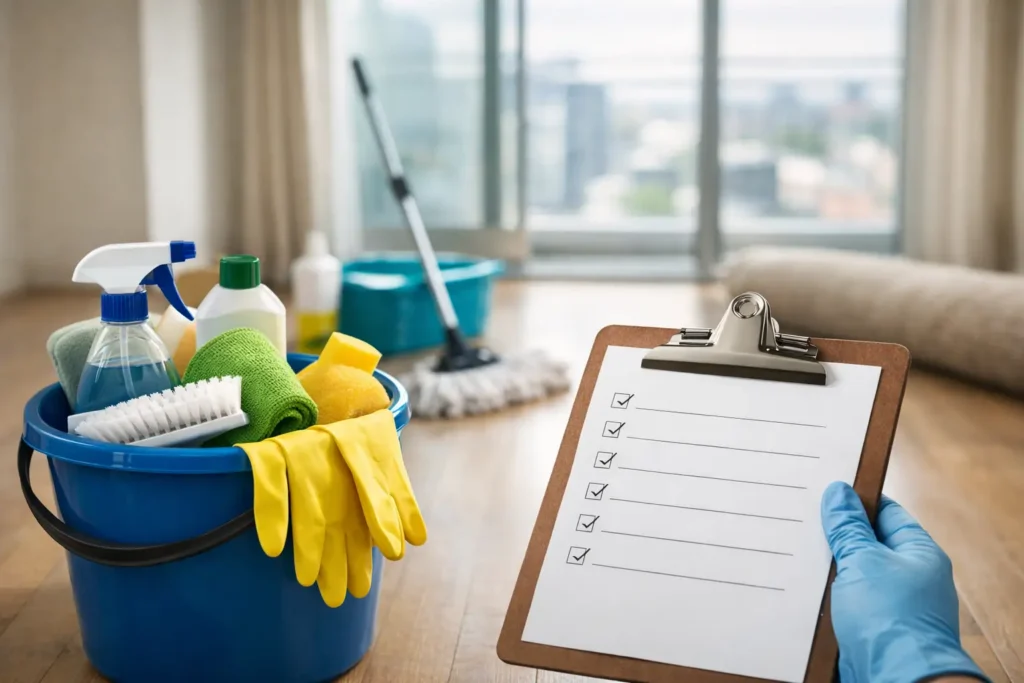
The final property inspection can turn a small missed detail into a stressful conversation about your bond. A proper vacate cleaning checklist gives you a clear plan, helps you work through the home in the right order and makes sure the areas agents inspect closely are not left until the last minute.
The goal is not simply to make the property look tidy. It needs to be returned in a comparable condition to the start of the tenancy, allowing for fair wear and tear. That means removing built-up grease, soap residue, dust, marks and rubbish from every surface included in your agreement.
Start with your condition report
Before bringing out the cleaning products, find your entry condition report and take fresh photos of each room. This is your reference point for pre-existing marks, worn carpet, damaged fittings and areas that were not in perfect condition when you moved in.
Read the lease carefully as well. Some agreements specify carpet cleaning, pest treatment or professional cleaning for particular circumstances, such as keeping pets. Requirements need to be reasonable, and cleaning will not repair damage or reverse normal ageing, but knowing what has been agreed prevents surprises at handover.
Move furniture and personal belongings out first. Cleaning around boxes, beds and appliances wastes time and leaves hidden dust lines behind. Once the property is empty, work from high to low in each room so dust falls onto floors before you vacuum or mop.
Vacate cleaning checklist: room by room
A detailed approach is the best defence against rushed, patchy cleaning. Tick off each area as it is completed, then do a slow final walk-through in daylight.
Kitchen
Kitchens usually require the most effort because grease settles on surfaces that appear clean at first glance. Empty every cupboard and drawer, then wipe inside, outside, along handles and around hinges. Do not forget the tops of overhead cupboards, where a greasy layer of dust can build up.
Pay close attention to the oven, cooktop, rangehood and splashback. Oven racks, glass doors, control knobs and trays need degreasing, while rangehood filters should be cleaned where practical. Clean the sink, taps and drain area, removing food residue and mineral marks.
Your kitchen checklist should include:
- Wiping benches, walls, switches and power points with care
- Cleaning the dishwasher filter, door seal and exterior
- Defrosting and wiping the fridge if it is included with the property
- Cleaning inside and behind accessible appliances
- Sweeping and mopping beneath cupboards and appliances
Avoid using harsh scourers on delicate finishes. A scratched cooktop or damaged laminate surface can become a repair issue, not a cleaning issue.
Bathroom, toilet and laundry
Bathrooms need more than a quick spray and wipe. Soap scum, mould, scale and hair collect in places that are easy to overlook, including shower tracks, drains, grout lines, exhaust fans and behind taps.
Clean the shower screen on both sides, the shower base, bath, vanity, mirror and toilet thoroughly. Use an appropriate product for scale around taps and showerheads, then rinse and dry surfaces to reduce streaking. In the toilet, clean the bowl, seat, lid, hinges, base and the floor around it.
In the laundry, wipe the trough, taps, cabinets and any included appliances. Check the washing machine recess, lint areas and floor behind the unit if accessible. A clean laundry drain and an empty lint filter make the room look properly finished rather than quickly attended to.
Bedrooms, living areas and hallways
Start high by dusting ceiling fans, air-conditioning vents, cornices, blinds and light fittings. Then wipe skirting boards, door frames, window sills, switches and built-in wardrobes. These edges show clearly during an inspection, particularly against white walls.
Vacuum carpets slowly, including along skirting boards, in wardrobe corners and under any remaining fixed furniture. Carpet can hold odours, embedded dirt, pet hair and old spills even when it looks presentable. If there are traffic marks, stains or a tired appearance, professional steam cleaning can make a visible difference and is often the more reliable choice before handover.
For hard floors, vacuum first and then mop with a product suitable for the surface. Too much water can leave streaks on vinyl, laminate and timber-look flooring. Open a window where possible and allow floors to dry before the final inspection.
Windows, walls and doors
Clean internal window glass, frames, tracks and sills. Window tracks often collect insects, grit and black residue, while fingerprints are especially visible on glass doors and sliding door handles.
Spot-clean walls gently rather than aggressively scrubbing every mark. Test cleaning products in a discreet area first, as over-cleaning can remove paint or create shiny patches. Wipe doors on both sides, including handles, edges and the area around locks.
For external windows, patios and balconies, check what is safely accessible and included in your responsibilities. Sweep leaves, remove cobwebs and clear rubbish, but do not take risks with upper-storey glass or difficult exterior access. A professional service is the safer option when specialist equipment is needed.
The details tenants most often miss
A good vacate clean is won or lost in the finishing details. Agents commonly check inside cupboards, oven edges, ceiling fans, skirting boards and window tracks because these areas quickly reveal whether the clean was thorough.
Also inspect smoke alarm surrounds without tampering with the alarm itself, air vents, flyscreens, light switches, garage floors and outdoor bins. Remove all rubbish from the house, garden, shed and wheelie bins if collection day has not yet arrived. Leave the property smelling fresh, but avoid heavy fragrances that may appear to cover an odour rather than remove it.
If you had pets, inspect for fur around skirting boards, upholstery and wardrobes, as well as scratches, stains or lingering smells. Cleaning can resolve dirt and odours, but it cannot hide damage. Raising genuine maintenance issues early is far better than hoping they will not be noticed.
Should you clean yourself or book a professional?
A DIY vacate clean can work well when the property has been maintained consistently, the home is small and you have enough time before key return. It is also more practical when carpets, tiles, grout and upholstery are already in good condition.
Professional help becomes worthwhile when the job involves stubborn oven grease, stained carpet, mould, marked grout, high windows or a tight moving schedule. Industry-grade equipment and experienced stain treatment can achieve results that household products often cannot, especially on high-traffic carpet and neglected tile surfaces.
For Mandurah renters, a full-service provider such as GM Carpet Cleaning can handle the difficult surfaces alongside the broader vacate clean. This reduces the need to organise multiple trades and gives you one accountable team focused on presenting the property at its best. Ask for a clear quote that confirms what is included, any exclusions and whether carpet cleaning or external areas are part of the service.
Leave time for a final inspection
Do not plan to finish cleaning five minutes before the property manager arrives. Aim to complete the main work the day before, then return with your checklist, photos and a rubbish bag for a final pass. Turn on lights, open cupboards, look through windows towards natural light and inspect each room from the doorway.
Take final photos after the clean, record meter readings if required and return every key, remote and access fob. A calm, well-prepared handover starts with a property that has been cleaned properly, checked carefully and left ready for its next tenant.