
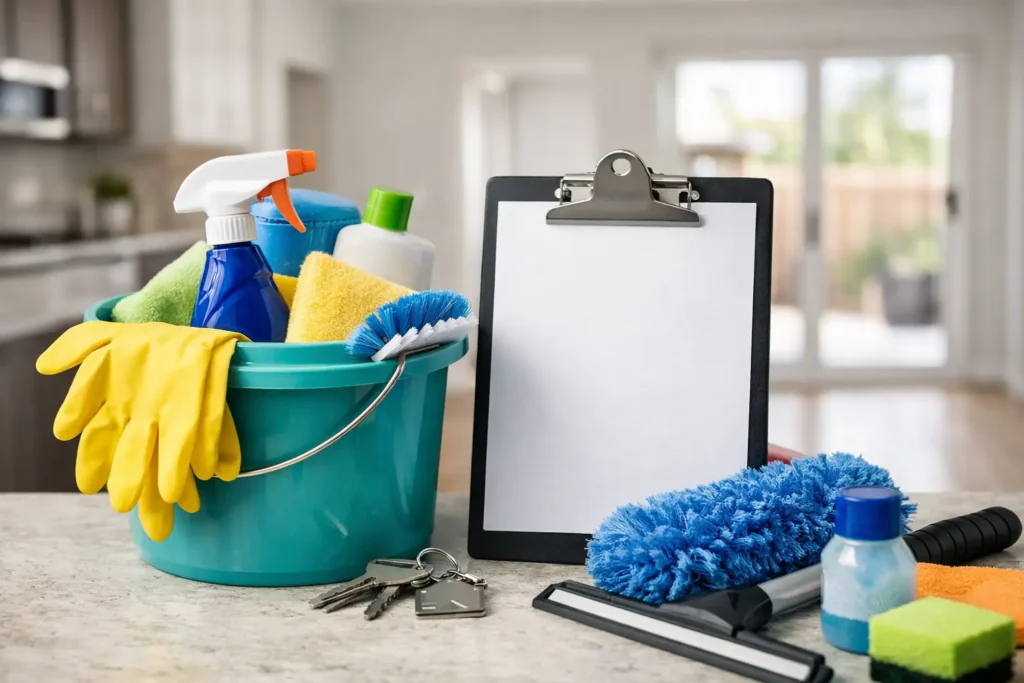
The final property inspection is rarely lost because of one obvious dirty bench. It is usually the small things – greasy rangehood filters, dusty skirting boards, marks inside cupboards and a shower screen left cloudy – that make a home look unfinished. This end of lease cleaning checklist helps WA tenants work methodically, protect their bond and hand back a property that looks properly cared for.
A vacate clean is not about making an older rental look brand new. Fair wear and tear is not the same as damage, and no amount of scrubbing should be expected to repair pre-existing faults. Your job is to return the property in a reasonably clean condition, taking your entry condition report, lease requirements and any agreed cleaning clauses into account.
Start With the Condition Report, Not the Cleaning Products
Before filling a bucket, read through your original property condition report and take fresh, dated photos throughout the home. Compare each room with the notes and images from when you moved in. This helps separate existing marks, aged surfaces and normal wear from cleaning that is genuinely required before handover.
Remove all personal items, rubbish and unwanted furniture first. Cleaning around boxes and loose belongings wastes time, and agents need clear access to inspect cupboards, storage spaces, the garage and outdoor areas. If you are arranging a professional cleaner, an empty property also lets them deliver a more complete result.
Work from the highest point in each room down to the floor. Dusting ceiling fans after vacuuming carpets simply creates extra work. It is also smart to clean one room fully before moving on, rather than doing every task in a rush on the final morning.
End of Lease Cleaning Checklist: Every Room
Use the following room-by-room checklist as your practical standard. Your property may have additional features, so add items such as a study, theatre room, balcony or store room where needed.
Bedrooms, living areas and hallways
Start by removing cobwebs from corners, ceilings, light fittings and window frames. Wipe down skirting boards, doors, handles, switches, power points and visible marks on walls. Be gentle with painted walls – harsh scrubbing can remove paint and turn a minor mark into damage.
Clean inside wardrobes, drawers, shelving and any built-in cabinetry. Dust blinds carefully, wipe window sills and tracks, and clean glass where accessible. Do not forget ceiling fans, air-conditioning vents and exhaust grilles, which collect far more dust than most tenants expect.
Vacuum all carpeted areas thoroughly, including edges, corners and under built-in furniture. Hard floors need to be vacuumed or swept before mopping so grit is not dragged across the surface. For carpets with stains, pet odours or heavy traffic marks, basic supermarket products often mask the issue rather than remove it. Professional hot-water extraction and targeted stain treatment can make a major difference at inspection time.
Kitchen
The kitchen receives close attention because grease and food residue build up quickly. Empty every cupboard and drawer, then wipe internal shelves, handles and exterior surfaces. Clean the benchtops, splashback, sink, taps and drain area, including behind small appliances if they remain with the property.
The oven deserves extra time. Remove racks and trays, clean the oven interior, door glass and surrounding seals, and wipe the cooktop thoroughly. Degrease the rangehood exterior and filters according to the manufacturer’s guidance. Leaving filters coated in grease is one of the most common reasons a kitchen clean feels incomplete.
Clean the dishwasher filter if the property has one, wipe the microwave inside and out, and pull out the fridge if it is supplied with the rental. Defrost it if necessary, remove crumbs and spills, then leave it clean, dry and switched off only if your property manager instructs you to do so.
Bathrooms, toilets and laundry
Bathrooms show water scale, soap scum and mould quickly, especially in poorly ventilated homes. Clean the vanity, basin, taps, mirrors, toilet, bath and shower from top to bottom. Pay close attention to grout lines, silicone edges, plugholes and the area around taps. A clean bathroom should not just smell fresh – it should look free of residue when viewed in daylight.
Shower screens need more than a quick wipe. Remove visible soap film and mineral marks, then dry the glass to avoid streaking. Clean exhaust fans and vents, wipe inside cabinets and polish chrome fittings without leaving product residue behind.
In the laundry, clean the trough, taps, cupboards and splashback. Remove lint from the dryer filter if one is included, and check behind and beside the washing machine space for dust, loose pegs or stray detergent. These overlooked areas can be the difference between a passable clean and a truly professional clean.
Windows, doors and fixtures
Clean internal window glass, tracks, frames and sills. If the lease requires external windows to be cleaned, consider access and safety first. High windows, upper-storey glass and difficult external areas are better handled with appropriate equipment rather than risky ladder work.
Wipe doors on both sides, including their top edges, frames and handles. Dust light fittings where safe to do so, clean switches and check that all removable hooks or adhesive strips have been taken down carefully. If removing them damages paint, photograph the area and speak with the property manager rather than trying to hide the problem.
Outdoor areas, garage and bins
Outdoor responsibilities depend on your lease and the condition report, but they are easy to overlook. Sweep courtyards, balconies, paths and the garage. Remove rubbish, clean up pet waste, clear obvious cobwebs and leave bins empty where collection timing allows.
Mow, edge and weed gardens only where those tasks are part of your tenancy obligations. Do not attempt major pruning, repairs or chemical treatments without checking first. Strata properties may have different rules, while houses with established gardens can require more detailed attention.
Don’t Forget Carpets, Tiles and Upholstery
Flooring can carry the visual weight of an entire inspection. A carpet may look clean from the doorway yet show dark traffic lanes in hallways, stains near dining areas or odour from pets. Likewise, tiled floors can look dull when grout is stained or oily residue has been left behind.
Check your lease for any specific carpet-cleaning requirement, particularly if pets have lived at the property. Keep invoices or receipts for any required professional work. If the carpet is stained, avoid soaking it with multiple products the night before inspection. Some treatments set stains deeper, bleach fibres or leave a sticky residue that attracts fresh dirt.
Professional cleaning is often the sensible choice when time is short, the property has large carpeted areas, or stains and odours are stubborn. GM Carpet Cleaning provides vacate cleaning support across Mandurah and surrounding areas, using industry-grade equipment to tackle carpets, tile and grout, upholstery and windows without the guesswork of a rushed DIY clean.
The Day Before Handover
Complete the cleaning early enough for surfaces and carpets to dry. Walk through the empty property in natural light, with your condition report in hand. Open every cupboard, look behind doors, check corners and inspect rooms from the perspective of someone seeing them for the first time.
Make sure you have completed these final handover tasks:
- Remove all rubbish, food, personal belongings and cleaning supplies.
- Check the letterbox, garage, shed, outdoor taps and storage areas.
- Replace any light globes or smoke-alarm batteries only if you are responsible for them.
- Take final photos of each room, appliances, floors and outdoor spaces.
- Return all keys, remotes, access fobs and parking passes as directed.
If an agent raises a cleaning concern, ask for clear details and photos before agreeing to extra work or charges. A reasonable request is easier to assess when it identifies the specific area and issue. Good records, a careful clean and receipts for professional services put you in a far stronger position.
Leave enough time for the jobs that show up under inspection lighting, not just the jobs visible during a quick pack-up. A calm final walkthrough can save far more stress than another frantic hour with a mop.