
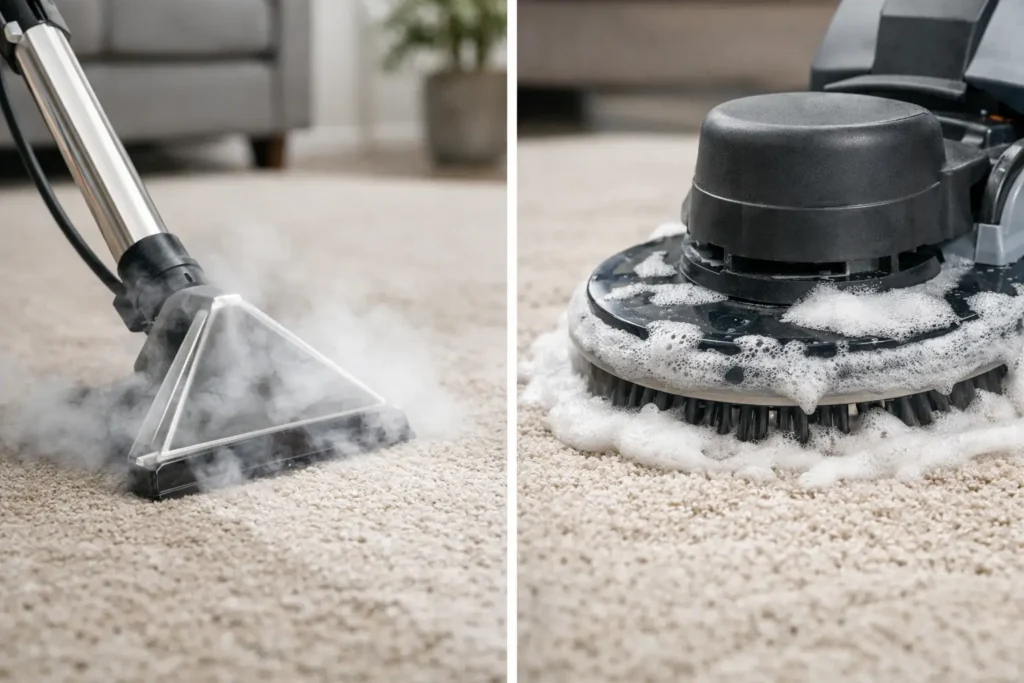
That patch near the sofa still looks tired even after a vacuum, and the hallway carpet feels like it is holding onto months of traffic. When clients ask about steam cleaning vs shampooing, they usually want one clear answer – which method will actually get the carpet cleaner, fresher, and back to looking right without creating a new problem.
The short answer is this: steam cleaning is usually the better professional option for most carpets. It removes deep-down soil more effectively, leaves less residue behind, and generally supports a healthier, longer-lasting result. Shampooing still has a place in some situations, but it is rarely the best choice when you want a truly professional clean.
Steam cleaning vs shampooing: what is the difference?
These two methods are often spoken about as if they do the same job. They do not.
Steam cleaning, more accurately called hot water extraction, uses heated water and cleaning solution injected into the carpet fibres and then extracted with powerful equipment. The key advantage is that the machine does not just apply moisture and detergent – it also pulls a large amount of loosened soil, allergens, and residues back out of the carpet.
Shampooing works differently. It uses a foaming detergent or carpet shampoo that is worked into the fibres with a rotating brush or bonnet-style machine. This process can lift surface grime and improve appearance, but it tends to leave more product behind. That leftover residue can attract fresh dirt faster, which is why some carpets look clean at first and then seem to get grubby again not long after.
That difference matters. A carpet is not properly cleaned just because it looks brighter for a few days. The method has to remove the soil, not simply move it around or mask it.
Why steam cleaning is usually the stronger choice
For most homes and commercial spaces in Mandurah, Rockingham, Baldivis and nearby areas, steam cleaning gives the better overall result because it is built around extraction. That is what separates a professional clean from a cosmetic one.
High-traffic areas collect dry soil, oils, food particles, pet matter, dust, and tracked-in grime. Once that material settles into the pile, a surface-level method will only go so far. Steam cleaning reaches deeper into the fibres and removes more contamination from the carpet itself. That means better hygiene, better presentation, and less chance of rapid re-soiling.
It is also the better option for many stain-related jobs. A trained technician can pair hot water extraction with targeted stain treatment to break down problem spots before lifting them out. That is especially useful for family homes, rental properties, and workplaces where spills and heavy use are common.
Another major advantage is residue control. When shampoo is left behind, it can create a sticky effect in the fibres. Steam cleaning, when done properly with commercial-grade equipment, rinses and extracts far more thoroughly. The carpet feels cleaner because it is cleaner.
Where shampooing can still have a role
Shampooing is not useless. It can improve the appearance of heavily soiled carpets and may suit certain older cleaning approaches or interim maintenance jobs. In some cases, agitation from shampooing helps loosen dirt from neglected fibres before another extraction method is used.
But there are trade-offs. Shampooing often uses more detergent, leaves more residue, and may not deliver the same level of soil removal as hot water extraction. If the goal is appearance alone, it may seem effective at first. If the goal is proper cleaning, hygiene, and longer-lasting results, it usually falls short.
This is where many property owners get caught. A cheap cleaning service may offer a quick shampoo clean because it is easier to perform with basic equipment. The carpet looks improved on the day, but the result does not hold. That is not value. It is a temporary lift that can leave you booking another clean sooner than expected.
Steam cleaning vs shampooing for common real-world situations
The best method depends on the carpet, the level of soiling, and what outcome matters most.
For family homes, steam cleaning is usually the clear winner. It handles general soil, everyday spills, pet odours, and tracked-in dirt far more effectively. If you have kids, pets, or a busy household, the ability to flush out grime from deep in the fibres makes a real difference.
For end-of-lease or vacate cleaning, steam cleaning is often the safer professional choice because it produces a cleaner finish with stronger extraction. Property managers and landlords are not impressed by foam sitting in the carpet. They want the carpet properly cleaned, refreshed, and presentable for inspection.
For offices and commercial spaces, steam cleaning again tends to offer the stronger long-term value. High-traffic areas need more than a quick cosmetic fix. They need a method that removes embedded dirt and helps maintain the professional appearance of the space.
For older carpets with severe build-up, the answer can be more nuanced. In some cases, a technician may use agitation or specialised pre-treatment as part of the process to break up heavy soil before extraction. That does not mean traditional shampooing is the best standalone service. It means experienced operators choose the right combination of methods based on condition, fibre type, and risk.
Drying time, smell, and after-clean feel
One of the biggest concerns people have is how long the carpet will stay wet. That concern is fair.
A poor-quality steam clean with weak equipment can leave carpets overly damp. A professional hot water extraction service using industry-grade machinery is different. Strong extraction reduces excess moisture and improves drying time significantly. Good airflow and sensible aftercare also help.
Shampooing can sometimes give the impression of being lighter or quicker, but that depends on how much product is used and how thoroughly the carpet is worked. If detergent stays in the fibres, you may notice a lingering smell or a slightly crunchy or sticky feel once dry. That is not the result most people want.
A properly steam-cleaned carpet should feel fresh, soft, and genuinely clean underfoot. It should not feel coated.
The equipment matters as much as the method
This is the part many articles skip, and it matters more than people realise. Steam cleaning done with hire equipment or underpowered machines is not the same as professional hot water extraction carried out by trained technicians.
The same goes for shampooing. In inexperienced hands, aggressive brushing can damage some carpet fibres, push stains wider, or leave heavy residue behind. The method alone does not guarantee the result. The operator, equipment, chemistry, and judgement all count.
That is why professional carpet cleaning should never be reduced to the cheapest quote. If a cleaner cannot assess fibre type, stain risk, traffic level, and drying conditions, they are guessing. Good carpet care is not guesswork.
Which method is better for long-term carpet care?
If you want your carpets to stay cleaner for longer and wear better over time, steam cleaning is generally the better investment. It removes abrasive soil that can grind away at fibres under daily foot traffic. It also avoids the heavy detergent build-up that can attract dirt back into the carpet.
That long-term view matters for homeowners protecting their flooring, tenants trying to present a property properly, and business owners wanting their premises to reflect a professional standard. A carpet that looks good for one day is not the same as a carpet that stays cleaner and fresher in the weeks that follow.
At GM Carpet Cleaning, that is exactly why professional hot water extraction is the preferred approach for most carpet cleaning jobs. It is the method that best aligns with what clients actually want – visible results, proper hygiene, honest value, and a finish that does not fade the moment life returns to normal.
So, should you choose steam cleaning or shampooing?
If the choice is between steam cleaning vs shampooing for general carpet cleaning, steam cleaning is the better option in most cases. It cleans deeper, removes more soil, leaves less residue, and supports better long-term results. Shampooing may still suit limited situations, but it is usually not the strongest option when quality matters.
If your carpet is stained, dull, holding odours, or simply not responding to regular vacuuming, the smartest move is to choose a professional service that focuses on proper extraction and tailored treatment, not quick cosmetic improvement. The right cleaning method should solve the problem, not just brighten it for the afternoon.
Clean carpets change how a room feels the moment you walk in, and the best result comes from using a method that does the job properly the first time.