
A carpet can look fine until the light hits it the wrong way, the room starts to smell a bit stale, or a spill keeps reappearing no matter how many times you blot it. That is usually the point people ask, how does professional carpet cleaning work, and is it really different from hiring a machine or doing it yourself? The short answer is yes. A proper professional clean is not just about making carpet look better for a day. It is about removing embedded soil, treating stains properly, improving hygiene, and restoring the overall feel of the carpet.
How does professional carpet cleaning work in practice?
Professional carpet cleaning follows a process, not a quick once-over. The exact method depends on the carpet type, the level of soiling, and what needs to be removed, but the goal stays the same – deliver a genuinely deeper clean than standard household equipment can achieve.
A trained technician starts by inspecting the carpet. This matters more than most people realise. Different fibres react differently to heat, moisture, and cleaning solutions. A wool carpet, for example, needs a more careful approach than many synthetic carpets. High-traffic lanes, pet accidents, food stains, and old spill marks all need to be identified before any cleaning starts.
Once the carpet has been assessed, the dry soil is usually removed first. This step is often overlooked, but it is critical. A large amount of what sits in carpet is dry particulate matter such as dust, grit, hair, and tracked-in debris. If that is left in place and then soaked, it can turn into muddy residue. Professional equipment is designed to lift far more dry soil than a standard domestic vacuum.
After that, the technician applies a pre-spray or treatment solution suited to the carpet and the type of soiling. This solution is there to loosen oily residues, dirt, and contaminants stuck to the fibres. In problem areas, specialised stain-removal products may be used to target coffee, wine, pet urine, grease, makeup, or other marks. This is where experience counts. The wrong chemical or technique can set a stain, damage the pile, or leave behind residue that attracts more dirt.
The main methods used by professionals
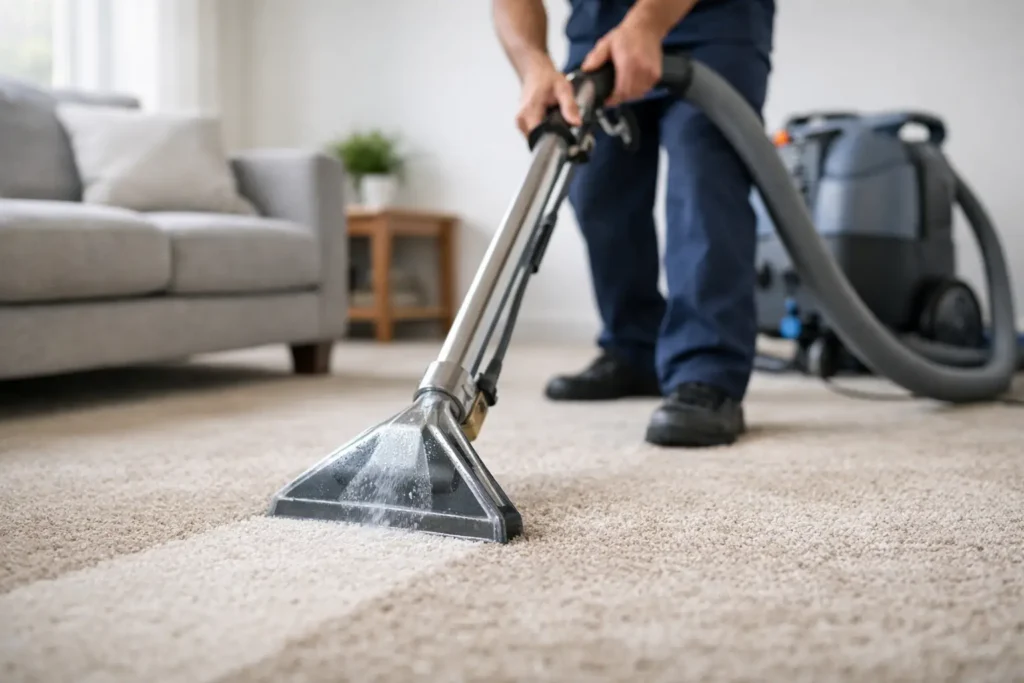
The most common professional method is hot water extraction, sometimes called steam cleaning. Despite the name, it is not just steam. Hot water and cleaning solution are injected deep into the carpet, then extracted with powerful suction. This flushes out loosened soil, allergens, and residues from the base of the fibres.
For most homes and many commercial spaces, hot water extraction gives the best all-round result. It is especially effective for deep cleaning, end-of-lease work, family homes, and carpets with built-up traffic soil. When done properly with industry-grade equipment, it cleans deeply without over-wetting the carpet.
There are other methods too. Low-moisture cleaning can be useful in commercial settings where faster drying is a priority. Encapsulation, bonnet cleaning, and dry compound cleaning each have their place, but they are not all equal when heavy soil, stains, or odours are involved. That is the trade-off. Faster turnaround can sometimes mean a shallower clean. A reliable technician will choose the method based on results, not just speed.
What happens during hot water extraction?
This is the part most people picture when they think of professional carpet cleaning. After pre-treatment, the technician uses a specialised machine with a wand or upholstery tool to rinse and extract the carpet. The machine applies heated water under controlled pressure, then immediately vacuums it back out along with dissolved soil.
The difference between professional and hire equipment is substantial. Professional machines have stronger vacuum power, better heat control, and more effective water recovery. That means more dirt comes out and less moisture stays behind. It also means the carpet is less likely to be left overly wet, sticky, or patchy.
A proper operator will also control the number of cleaning passes, pay attention to edges and corners, and adjust technique for traffic lanes or delicate fibres. It is not just about running a machine over the room. It is about using the machine correctly.
Why stain removal is not a separate job from cleaning
Many people expect a full carpet clean to remove every stain completely. Sometimes that happens. Sometimes it does not. A professional service improves most stains significantly, but some marks cause permanent dye damage, bleaching, or fibre distortion.
That is why stain treatment starts with identifying what the stain actually is. Mud, soft drink, pet urine, rust, ink, and cosmetics all behave differently. Some need protein treatments. Some need solvent-based products. Some need neutralising. If the wrong approach is used, the stain can wick back, spread, or become harder to remove.
This is one of the biggest reasons people book a professional rather than trying supermarket products. Spot cleaners often mask the problem for a short time or leave residue behind. Professional stain removal is about chemistry, fibre knowledge, and the right equipment, not guesswork.
How long does it take and when can you walk on it?
Most residential carpet cleaning jobs take a couple of hours, depending on the size of the home, how furnished the rooms are, and the condition of the carpet. A single room is obviously quicker than a full-house vacate clean.
Drying time usually ranges from a few hours to most of the day. It depends on humidity, airflow, carpet thickness, and the cleaning method used. In warmer weather with windows open and good ventilation, carpets dry faster. In cooler conditions or heavily soiled areas that need extra treatment, drying can take longer.
You can usually walk on the carpet soon after cleaning if needed, but it is best to limit traffic until it is mostly dry. Shoes should stay off freshly cleaned carpet. If you need to step on it, clean socks or indoor footwear are the safer option.
What professional carpet cleaning actually removes
A truly professional clean does more than lift visible dirt. It can remove trapped dust, allergens, bacteria, body oils, food residue, pet dander, and odour-causing contamination. In rental properties and family homes, this matters for more than appearance. It helps the entire space feel cleaner, fresher, and better looked after.
That said, carpet cleaning is not magic. It will not reverse years of wear, repair fibre loss, or fully restore carpet that is physically damaged. Flattened pile in a hallway may improve after cleaning, but it will not always return to new. A trustworthy cleaner will be upfront about that. The point is real improvement, not inflated promises.
Why DIY machines often fall short
Hire machines can help with surface cleaning, but they are rarely a substitute for a professional service. They generally have weaker suction, lower heat, and less effective extraction. That often leaves carpets wetter for longer and can result in detergent residue being left behind.
There is also the issue of technique. Too much water, too much product, or repeated passes over the same area can create problems. Over-wetting can lead to musty smells, slow drying, and in some cases damage to underlay or subflooring. DIY cleaning also tends to struggle with stubborn stains, odours, and high-traffic grey patches.
For routine maintenance in a low-use room, DIY might be enough. For end-of-lease cleaning, family homes, pet issues, or commercial presentation, professional equipment and proper training make a noticeable difference.
How often should carpet be professionally cleaned?
For many homes, every 12 months is a solid baseline. Homes with kids, pets, allergies, or heavy foot traffic often benefit from cleaning every 6 to 9 months. Commercial spaces may need more frequent attention, especially in reception areas, offices, and shared walkways where presentation matters.
Waiting until the carpet looks heavily soiled is usually a mistake. By then, grit and residue have had more time to wear down the fibres. Regular professional cleaning is not just cosmetic maintenance. It helps extend the life of the carpet and keeps the space in better condition overall.
Choosing a service that does the job properly
If you are booking carpet cleaning in Mandurah, Rockingham, Baldivis or nearby suburbs, the real question is not just how does professional carpet cleaning work. It is whether the company you choose follows a proper process from inspection to stain treatment to extraction and drying. That is where the results come from.
A dependable service should offer clear pricing, show up when booked, use professional-grade equipment, and be honest about what can and cannot be achieved. That is the standard GM Carpet Cleaning is built around – no shortcuts, no vague promises, just a truly professional clean backed by experience, proper equipment, and a satisfaction-focused approach.
Fresh carpet changes the way a room feels underfoot, the way it smells, and the way the whole property presents. When the job is done properly, you notice it straight away, and so does everyone else.